

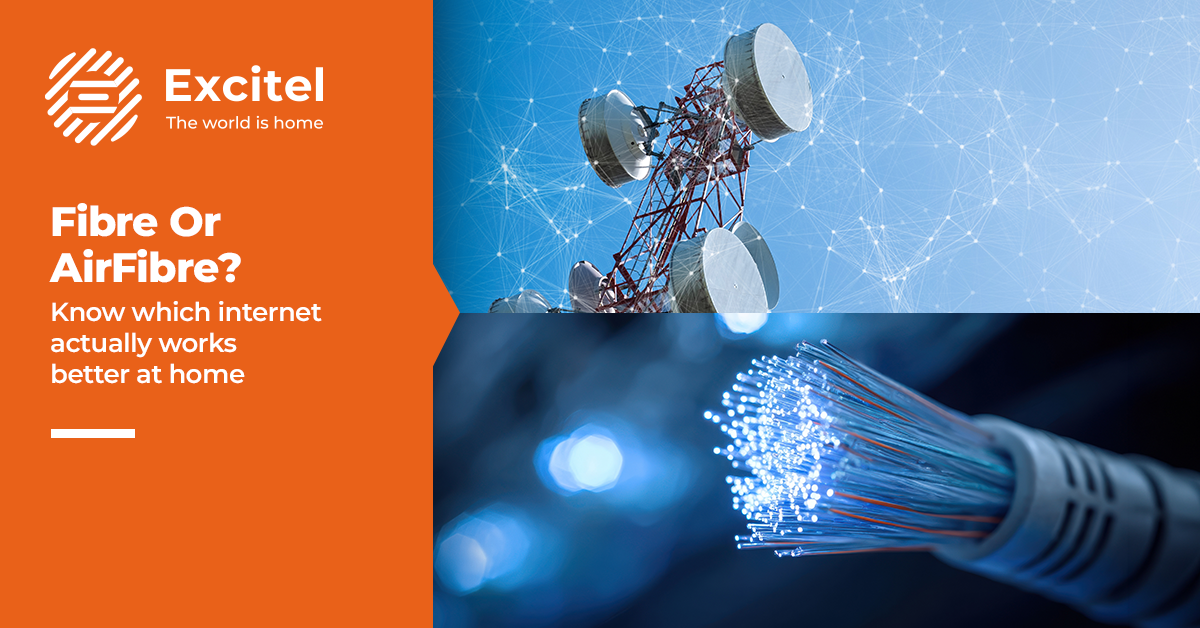


Two types of internet are being talked about everywhere right now. These are fibre and AirFibre. Many people hear these terms but do not clearly understand the difference. This often leads to confusion while choosing a home internet connection. In reality, the choice you make affects your daily life. Your internet speed, your video calls, and even your streaming experience depend on it. This blog explains everything and will help you decide which option works best for your home.
What Is Fibre Internet
A fibre internet connection uses very thin cables made of glass. These cables carry data in the form of light signals. Because of this, the speed is very fast and very stable. It is one of the most advanced forms of broadband connection available today. Since it is a wired connection, it does not get affected by walls, distance inside the house, or other devices nearby. This makes it a stable internet connection for daily use. Whether it is morning or evening, the internet speed remains consistent. Even during peak hours, you will not notice major drops.
Fibre is now widely available in Indian metro cities. It is also expanding quickly to smaller cities and towns. Providers are building better infrastructure to reach more homes. Excitel broadband offers true fibre-to-the-home services in more than 50 cities across India. Their plans are affordable and designed for regular home use. If you are looking for high-speed internet that stays consistent, fibre is a strong option.
What Is AirFibre
AirFibre is a wireless home internet connection. It does not require cables to reach your home. Instead, it uses mobile towers to send internet signals. A small antenna or receiver is installed on your terrace or near a window to catch the signal. The setup is quick and simple because there is no drilling or wiring needed. This makes it useful in places where laying cables is difficult. However, the performance is not always consistent.
Speeds may look good on paper, but they can drop during peak hours when many users are connected to the same tower. Weather conditions also play a role. Rain, strong winds, or storms can weaken the signal. Even buildings and physical obstacles can affect performance. When you compare Airfibre vs fibre internet, fibre clearly offers better reliability. AirFibre can work for light usage, but it may struggle with heavy daily tasks like streaming or working from home.
Speed & Performance Comparison
Speed is not just about numbers. It is also about how stable that speed remains throughout the day. Fibre internet has a clear advantage here. It offers very low latency, usually under 10 milliseconds. AirFibre can go up to 50 milliseconds or more. This difference matters a lot for gaming and video calls. Low latency means less delay. Your calls feel smoother, and your games respond instantly.
If you watch 4K content, attend HD video calls, or play online games, fibre performs much better. It can also handle multiple devices at the same time without any issues. Excitel Wi-Fi is designed for homes where several devices are connected at once. It ensures that everyone gets a smooth experience without speed drops. This makes it one of the best internet options for home users who need reliable performance.
Pricing & Value
At first glance, AirFibre may seem cheaper because the installation cost is lower. There is no need for cables, so setup is quick and simple. However, the monthly cost is often similar to fibre plans.
When you look at value, a fibre internet connection stands out. You get higher speeds at similar or even lower monthly prices. This makes it a better long-term option. Some AirFibre plans also come with data limits. After a certain usage, the speed may reduce. This affects your experience, especially if you stream or work online regularly.
Over one or two years, fibre proves to be more cost-effective. It offers fewer disruptions and better performance. You do not have to worry about fluctuating Wi-Fi speed or signal issues.
Excitel internet plans are simple and transparent. They offer unlimited internet plan options with no hidden charges. This makes it easier for users to choose without worrying about unexpected limits.
Which One Should You Choose
The right choice depends on your needs and location. For students, families, and working professionals, fibre is the better option. It provides a stable internet connection that supports daily tasks without interruption. If you live in a rural or remote area where fibre is not available, AirFibre can be a useful alternative. It helps bridge the gap where cable infrastructure is still developing.
However, fibre is more future-ready. It can support higher speeds without changing the existing cables. As your usage grows, your connection can easily keep up.
If you regularly attend meetings, stream content, or play games, wireless broadband may not be enough. In such cases, choosing fibre is a smarter decision. If Excitel broadband is available in your city, it is worth considering. It offers reliable service, strong speeds, and good value. Switching to a better home internet connection can make a noticeable difference in your daily life.
FAQs
- Is AirFibre better than fibre?
AirFibre is useful where cables are not available. However, fibre offers better stability, speed, and long-term performance for daily use. - Which is faster: fibre or wireless internet?
Fibre is faster and more consistent. Wireless internet can vary depending on signal strength, weather, and network congestion. - Should I switch to fibre in 2026?
Yes, if fibre is available in your area, it is a better choice. It offers stable performance, higher speeds, and better value for modern internet needs.