

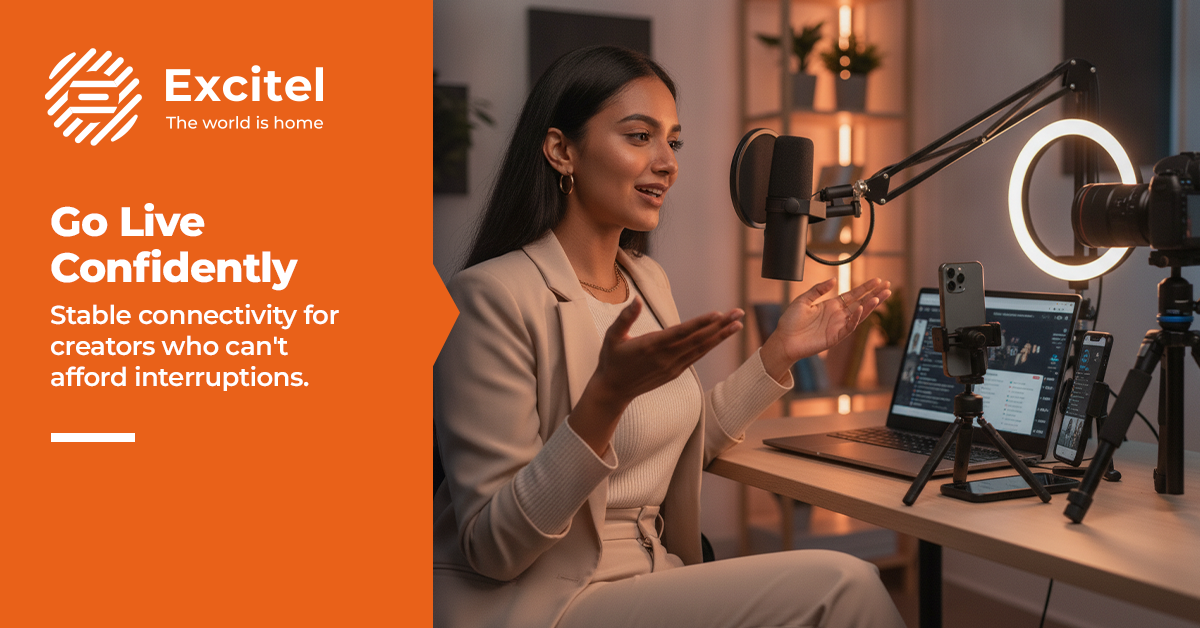


There’s a quiet shift happening in bedrooms and studios across India. Creators who were once tethered to mobile data to post their latest reel or upload a YouTube video have switched to something far more dependable, fibre broadband. If you’re still running a 50Mbps connection and wondering why your uploads take forever, or your livestreams keep buffering, the answer isn’t your editing software. It’s your internet.
The Evolution of Content Creation
Not long ago, a decent smartphone camera and basic editing app were enough to build an audience. That’s changed dramatically. Audiences now expect sharper visuals, faster uploads, and consistent quality across every platform. This has pushed the average creator’s internet requirements from something casual to something closer to professional-grade infrastructure.
Video content now dominates nearly every platform, with 4K uploads becoming standard rather than exceptional. Creators uploading to YouTube, Instagram, and similar platforms deal with file sizes that simply didn’t exist five years ago. A single 10-minute 4K video can easily exceed 10–15GB before compression, and cloud-based workflows mean that footage, project files, and exports are constantly moving between devices and servers.
The rise of the best internet for livestreaming as a priority has added another layer entirely. Livestreaming doesn’t just need speed. It needs consistency. A single dip in connection during a live session can kill audience engagement in seconds.
This is where Excitel fibre internet starts making a real difference. With unlimited data broadband and no data caps, creators can upload, back up, and stream without watching a usage counter tick down.
Why Mobile Hotspots Are No Longer Enough
Mobile hotspots feel convenient until they’re not. For occasional browsing or sending a quick file, they work fine. For content creation workflows, they collapse under pressure.
- Data limitations: Even high-tier mobile plans come with FUP limits that throttle speeds after a threshold. Uploading a few 4K videos can blow through those limits quickly.
- Unstable speeds: Mobile networks share bandwidth across everyone in the area. During peak hours, speeds can drop sharply with no warning, which makes timed uploads or scheduled livestreams genuinely unreliable.
- Network congestion: Tower congestion is a real issue, especially in the evenings when data traffic peaks across urban India.
- Professional workflow challenges: Cloud backups, team file sharing, and multi-platform publishing all require a connection that can handle simultaneous data tasks. Hotspots buckle under that kind of load.
Excitel unlimited broadband solves this directly. It delivers consistent speeds to your home without depending on mobile tower capacity, which means a creator’s workflow runs the same at 10pm as it does at 10am.
Real Bandwidth Needs of Modern Creators
Understanding how much internet speed for 4K upload you actually need changes the way you plan your setup. The numbers matter here.
What’s Actually Eating Your Bandwidth
Uploading a 4K video to YouTube or cloud storage isn’t the only thing your connection handles. A modern creator’s session typically includes:
- Video uploads: A 10GB 4K file at 200 Mbps takes roughly 7 minutes to upload. The same file at 300 Mbps drops to under 4 minutes. Over dozens of uploads a month, this gap adds up enormously.
- Cloud backups: Broadband for cloud backup needs isn’t trivial. Raw footage, project timelines, and asset libraries can run into hundreds of gigabytes that need regular syncing.
- Multi-device usage: A creator’s workspace often means a laptop for editing, a phone for monitoring comments, a tablet for reference, and a router-connected camera all running at once.
- Team collaboration: Sharing large files with editors, coordinators, or brand partners in real time requires bandwidth to spare, not bandwidth being rationed.
For broadband for video editing specifically, upload speed matters as much as download speed.
Most consumer plans are heavily skewed toward downloads. Fibre connections offer far more symmetrical performance, which makes a tangible difference when you’re pushing large files outward constantly.
How 50Mbps Becomes a Bottleneck
A 50Mbps plan sounds reasonable on paper. In practice, it creates problems that compound as a creator’s output grows.
| Task | 50 Mbps | 200 Mbps | 400 Mbps |
|---|---|---|---|
| Upload 10GB 4K Video | ~27 minutes | ~7 minutes | ~3.5 minutes |
| Simultaneous Cloud Backup | Severely slowed | Manageable | Smooth |
| Livestreaming at 1080p | Inconsistent | Stable | Very stable |
| Multi-Device Usage | Drops | Handles | Handles easily |
Those upload times matter more than they seem. A creator publishing daily content and spending nearly 30 minutes per upload waiting for a file to push is losing over three hours a week to slow broadband. Missed publishing schedules follow naturally, since uploads that drag past the algorithm’s peak window perform worse.
Workflow inefficiencies stack up, too. Editors waiting on files, cloud renders that stall mid-process, backup software choking on available bandwidth. These aren’t minor inconveniences. For creators building a business, there are genuine constraints on growth. Upgrading to fast upload speed for creators isn’t a luxury purchase. It’s removing a bottleneck that was quietly costing time and opportunity.
Choosing Broadband for Content Creation
Picking the right plan comes down to an honest assessment of how you work.
Speed Recommendations
For creators uploading 1080p content occasionally, 200 Mbps is a solid floor. If you’re uploading 4K regularly, livestreaming, or running a team workflow, 300 Mbps is where things start feeling genuinely comfortable. This is especially true for broadband for Instagram reels upload workflows, where shorter but frequent uploads across multiple drafts and exports are the norm.
Wired vs Wireless Setups
Best Wi-Fi for content creation in India is a reasonable question, but for dedicated workstations, a wired ethernet connection to your router will always beat Wi-Fi for upload consistency. Wi-Fi adds latency and potential interference that can interrupt large file transfers. Plug in where possible.
Future-Proofing Your Connection
Content formats are getting heavier every year. 8K is already a conversation. Higher frame rates, RAW files, and expanded cloud workflows mean bandwidth needs will only climb. Choosing a plan with headroom now saves the hassle of upgrading mid-project later.
Excitel’s fibre broadband plans go up to 300 Mbps with unlimited data and no hidden caps. The Excitel 300 Mbps plan is particularly well-suited for creators who treat their internet connection the way they treat their camera: as professional equipment that needs to perform reliably, every day. The bottom line is straightforward. If your internet is making you wait, it’s costing you more than just time.
FAQs
How much upload speed do YouTubers need to upload 4K videos in India?
For regular 4K uploads, a minimum of 100 Mbps upload is recommended, though 200–300 Mbps makes the process significantly faster and more reliable. Fibre broadband offers far better upload performance than mobile data.
Can 50 Mbps broadband handle daily 4K uploads to YouTube or cloud storage?
It can, but expect long wait times. A 10GB 4K file can take close to 30 minutes at 50 Mbps. For daily uploads, this quickly becomes a serious time drain.
How long does a 10GB 4K video take to upload on 200 Mbps vs 300 Mbps fibre?
At 200 Mbps, roughly 7 minutes. At 300 Mbps, under 4 minutes. The difference feels small per upload but compounds significantly across a high-volume workflow.
Best broadband plan for content creators who upload and livestream daily?
Look for a fibre plan with at least 200 Mbps, unlimited data, and no throttling. A 300 Mbps fibre plan covers uploads, livestreaming, and cloud backups simultaneously.
Which Excitel fibre plan is recommended for YouTubers and Instagram creators?
The Excitel 300 Mbps plan handles heavy upload workloads, cloud backups, and multi-device use comfortably. Excitel unlimited broadband comes with no data caps, making it practical for high-volume creators.