

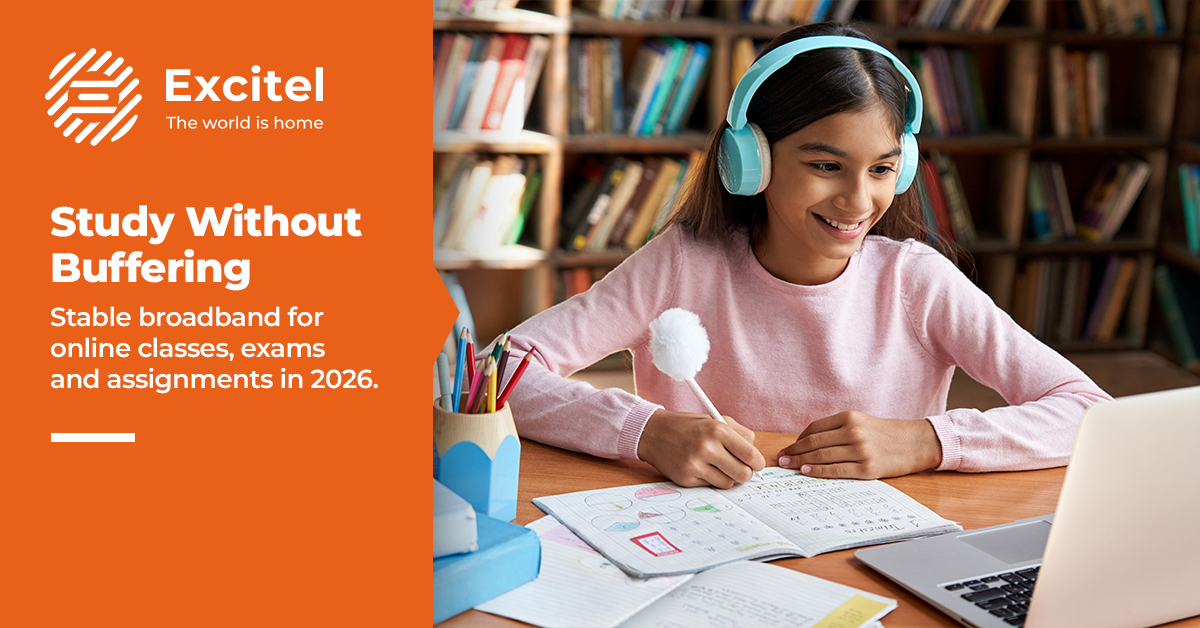


Online learning in 2026 is part of everyday life for students, parents and working professionals. Virtual classrooms, study portals and recorded lectures run across the day, so the home connection matters more than ever. For many households, Excitel Broadband already shoulders this load, offering plans built for steady streaming and multiple users. Early choices about speed and stability shape how much students can focus, participate and finish work without stress.
This guide explains the internet needs of modern online learning, the speeds suited to different activities, how families manage multiple learners, and what to look for when choosing a home connection. It draws on what providers like Excitel offer and what parents should prioritise for long-term learning success.
Internet Needs of Online Learning
Education has shifted online. Schools a Modern nd colleges use live video classes, digital portals for homework, and recorded lectures for revision. Students must join live sessions on time, access learning resources and upload assignments reliably. These tasks require not only speed but steady performance, so lessons do not freeze or audio does not drop.
Providers emphasise low latency and continuous performance for home users. Excitel’s fibre and broadband offerings offer unlimited plans and consistent speeds, helping reduce interruptions during lessons.
Internet Speed for Different Learning Activities
Different tasks need different amounts of bandwidth. Live video classes and timed online exams need steady upload and download speeds. Research, cloud-based resources and video revisions need consistent access so pages and media load quickly. When speed falls, buffering and login delays interrupt concentration and can affect test performance.
Practical speed guidance helps parents choose a plan. For most HD video classes, allocating about 3 to 5 Mbps per active device is a useful rule of thumb Zoom lists bandwidth needs for 720p and 1080p video within this range. For high-definition revision videos, platforms recommend roughly 5 Mbps for 1080p and around 20 Mbps for 4K playback. When several learners use the connection at once, add each device’s needs and leave headroom for background updates and other smart devices.
Parents Managing Multiple Learners at Home
Families with more than one student
More households now host several learners who may have overlapping class times and deadlines.
Challenges of simultaneous classes
Multiple live sessions can strain a modest connection. One child’s video may lag while another’s call drops.
Device sharing and speed drops
Shared devices and many connected gadgets can reduce effective speed per user, causing poor video quality and slow uploads.
Need for stable home broadband.
A robust home connection prevents frequent slowdowns so every learner can join classes and submit work reliably.
How Excitel Broadband supports multiple users
Excitel’s plans are aimed at dense, urban homes and often include unlimited usage and quick installation options to help families manage multiple users without heavy speed degradation. Check local plan availability and the speeds offered in each city before signing up.
Impact of Internet Quality on Learning Outcomes
Good internet quality supports attention and engagement. When connections are steady, students can participate, ask questions and complete tasks on time. When they are not, missed explanations and repeated disconnections hurt confidence and performance.
Reliable home internet acts as a quiet ally: it removes technical barriers so learning can stay on track. Choosing a plan that emphasises continuous speed and low latency helps maintain that support.
Choosing the Right Broadband for Education
When selecting a provider, parents should prioritise reliability over temporary fixes. Consider these points:
- Confirm coverage and the actual speeds available in the neighbourhood.
- Prefer plans with unlimited data and clear policies about speed and usage.
- Check support and installation options so the service starts quickly.
Excitel is one of the providers advertising unlimited plans, competitive speeds and city-specific packages designed for streaming and multiple users. Parents should verify coverage and pick a speed tier that matches household device counts and live class schedules before committing.
FAQs
What internet speed is best for online classes?
A consistent broadband connection works best. Live classes and exams need stable speed to avoid buffering, especially when multiple devices are connected.
How does slow internet affect online learning?
Slow internet causes buffering, missed lessons, login failures, and exam disruptions, which reduce focus and negatively impact academic performance.
Is broadband necessary for students at home?
Yes. Broadband provides reliable, continuous connectivity for classes, portals, and assignments, making it ideal for long-term learning needs.